Beyond the Canvas: The Enduring Saga of Rembrandt's Life, Loves, and Tragedies
Few artists capture the human condition with the raw power and emotional depth of Rembrandt van Rijn. His name is synonymous with the Dutch Golden Age, a period of unprecedented artistic and economic prosperity. Yet, behind every brushstroke of an echtes Rembrandt Gemälde lies not just unparalleled genius, but a life rich with ambition, profound love, and devastating personal loss. To truly understand the masterpieces, we must journey beyond the canvas and into the tumultuous world of the man himself, a world where triumphs and tragedies were often intertwined.
The Formative Years: A Prodigy from Leiden
Rembrandt Harmenszoon van Rijn entered the world on July 15, 1606, in Leiden, the ninth child of a miller, Harmen Gerritsz van Rijn, and a baker’s daughter, Neeltje Willemsdr van Suydtbrouck. Despite his family’s modest means, young Rembrandt's early education was fostered, even seeing him admitted to a Latin school at the tender age of 14. However, formal schooling soon proved less captivating than the burgeoning world of art. He quickly began taking art classes, showing an early inclination that would define his destiny.
His artistic journey led him to Amsterdam in 1625, where he sought advanced training under the era's leading painter, Pieter Lastman. Though his time with Lastman was reportedly brief—just six months according to Arnold Houbraken—it profoundly shaped Rembrandt's early aspirations. Works such as The Stoning of Saint Stephen, dated 1625, and numerous subsequent biblical scenes, reveal his ambition to become a history painter, a genre considered the pinnacle of artistic achievement at the time. Returning to Leiden, he established his own workshop, attracting students like Gerrit Dou and Isaac de Jouderville, who were drawn to his burgeoning talent. During this period, he also forged a significant friendship with fellow painter Jan Lievens, their stylistic correlation indicating a close professional bond for years.
By 1631, Rembrandt's reputation had grown significantly, drawing him back to Amsterdam. He took charge of the esteemed workshop of art dealer Hendrick Uylenburgh, with whom he also lodged. This move proved pivotal, leading to one of his most iconic early commissions: The Anatomy Lecture of Dr. Nicolaes Tulp in 1632. This work was a powerful testament to his ability to capture individual likenesses and infuse group portraits with dramatic narrative and psychological depth, hinting at the grandeur that an echtes Rembrandt Gemälde would come to embody. His early development laid the foundation for the revolutionary techniques and emotional resonance that would define his entire career.
Love, Loss, and the Golden Age of Art
The mid-1630s ushered in a period of great personal happiness and unparalleled artistic success for Rembrandt. In 1634, in the Frisian village of Sint Anna Parochie, he married Saskia Uylenburgh, the daughter of a prominent burgomaster of Leeuwarden and a cousin of Hendrick Uylenburgh. Saskia became not just his beloved wife but also his muse, gracing many of his portraits and adding a radiant warmth to his life and art.
During this "Golden Age" of Dutch painting, Rembrandt's star burned brightest. His unparalleled skill allowed him to command steep prices for his works well into the 1650s. For instance, in 1639, the court in The Hague paid him an impressive 1,200 guilders for two emotionally charged Passion scenes: The Entombment of Christ and The Resurrection of Christ. Other notable commissions included The Adoration of the Shepherds and The Circumcision of Christ.
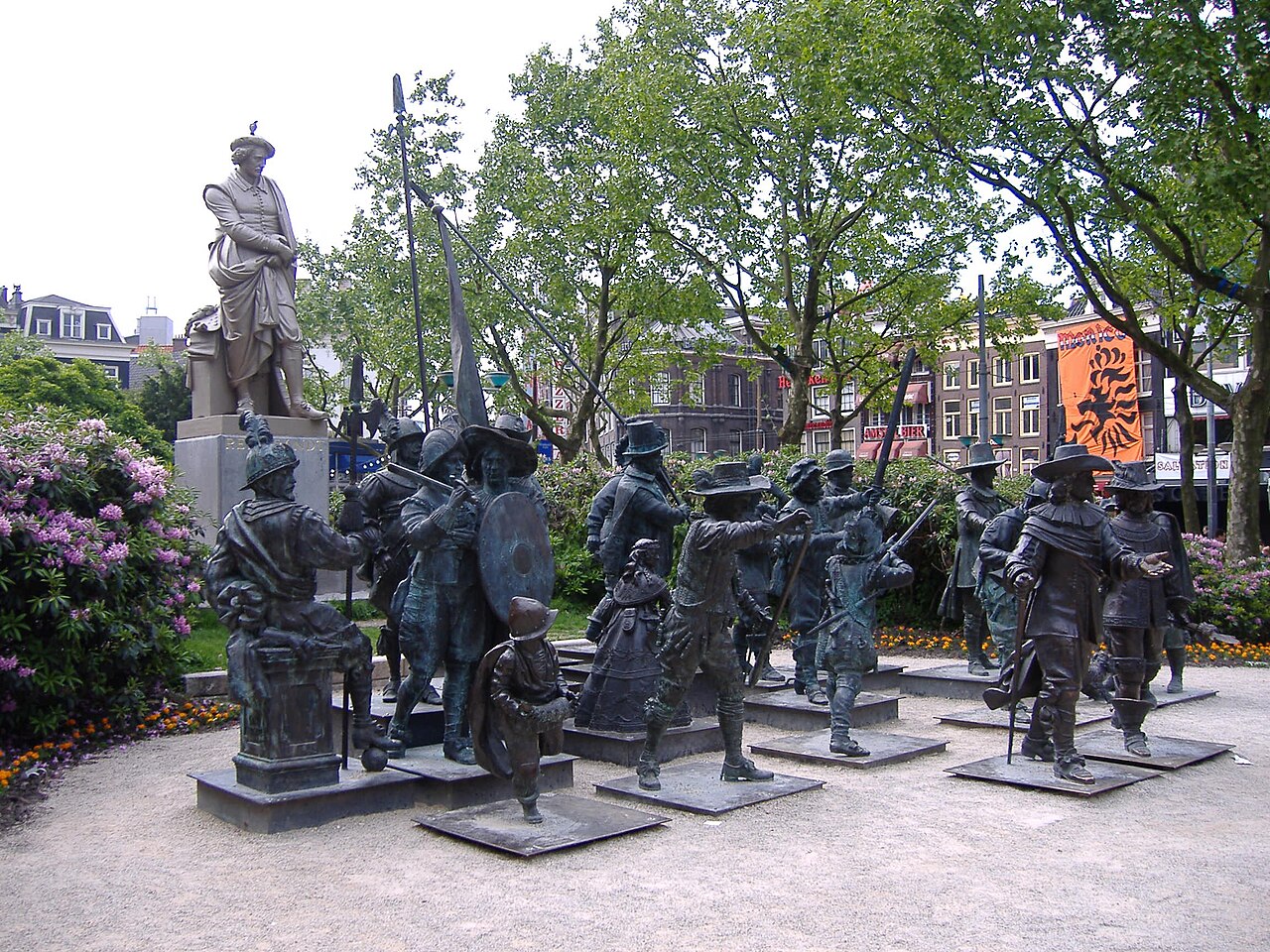
The zenith of this period was arguably his monumental civic guard picture, The Night Watch, on which he labored between 1639 and 1642. This singularly original work broke away from conventional group portraiture, infusing it with dynamic action, dramatic lighting, and intricate characterization. He received an average of 100 guilders from each of the eighteen officers portrayed, a substantial sum reflecting his prestige.
However, beneath this veneer of success, personal tragedy began to cast long shadows. Rembrandt and Saskia endured the heartbreaking loss of three children in infancy, a common but no less painful experience in the 17th century. The deepest sorrow struck in the summer of 1642, when Saskia died at the tender age of twenty-nine, shortly after the birth of their son, Titus. Her death marked a profound turning point, plunging Rembrandt into a period of immense grief and subsequent personal turmoil. The raw emotion and psychological depth found in an echtes Rembrandt Gemälde from this period often reflects his profound personal experiences, with light and shadow seeming to mirror the chiaroscuro of his own soul.
A Scandalous Chapter: Later Life and Enduring Legacy
Saskia’s death in 1642 ushered in what biographer Jan Jansz. Orlers described as a "difficult and scandalous period" for the master, where his own actions undeniably played a significant role. To care for his infant son, Titus, Rembrandt hired the widow Geertje Dircks. Their professional relationship soon evolved into a romantic one. However, this entanglement deteriorated dramatically when Rembrandt met Hendrickje Stoffels around 1647. His relationships and subsequent legal battles with Dircks, including accusations of breach of promise, exposed his private life to public scrutiny and financial strain.
Despite these personal tribulations, Rembrandt's artistic prowess continued to evolve, even as public taste began to shift. The elite patrons increasingly favored the smoother, more idealized styles of artists like Govaert Flinck and Bartholomeus van der Helst. Yet, Rembrandt remained committed to his unique vision, focusing on an ever-deepening exploration of human psychology and spiritual themes. He continued to attract brilliant students, including Carel Fabritius, Nicolaes Maes, and Arent de Gelder, who would carry forward aspects of his groundbreaking techniques.
His later works, particularly his poignant self-portraits, offer an intimate glimpse into his aging visage and reflective spirit. Imagine an older man, as described in contemporary accounts, with pale, peachy skin, deep-set, gray eyes under a furrowed brow, a faintly pink, bulbous nose, and sunken cheeks shaded with gray. His peach-colored lips framed by a wispy, gray mustache and goatee – this is the face of a man who had experienced the full spectrum of human emotion, and these experiences are etched into every line and shadow of his later self-depictions. These deeply introspective works, an echtes Rembrandt Gemälde of his later years, demonstrate a profound resilience and an unwavering commitment to authentic self-expression, even as his external circumstances grew challenging.
Identifying an Echtes Rembrandt Gemälde Today
For collectors, connoisseurs, and art enthusiasts, the allure of an echtes Rembrandt Gemälde remains immense. Yet, the journey to authenticate a Rembrandt is often as complex and layered as the master's own brushstrokes. Due to his prolific output, his workshop practices, and the numerous copies and imitations produced over centuries, distinguishing a genuine Rembrandt from works by his pupils or later forgers requires rigorous scholarship.
Here are key elements experts look for:
- Brushwork and Impasto: Rembrandt's distinctive use of thick paint (impasto) to build texture, particularly in highlights, is a hallmark. His brushwork could range from meticulously fine details to broad, expressive strokes.
- Chiaroscuro and Light: His masterful manipulation of light and shadow (chiaroscuro) to create drama, volume, and emotional focus is arguably his most recognizable contribution. Light in an echtes Rembrandt Gemälde often seems to emanate from within the painting itself.
- Psychological Depth: Beyond mere likeness, Rembrandt captured the inner lives of his subjects, conveying their thoughts, emotions, and character through subtle facial expressions and gestures.
- Signature and Dates: While helpful, signatures can be forged or applied by workshop assistants. Stylistic analysis is paramount.
- Provenance and Pigments: A clear history of ownership (provenance) is crucial. Scientific analysis of pigments and materials can confirm if they were available and used during Rembrandt's time.
The Rembrandt Research Project, established in 1968, has dedicated decades to meticulously studying and re-attributing works, showcasing the immense effort required to definitively label a painting as an echtes Rembrandt Gemälde. Encountering a confirmed genuine work is not merely seeing a painting; it is connecting with a profound moment of human creation, imbued with the life and soul of its maker.
Rembrandt van Rijn's life was a testament to the unpredictable nature of genius and human experience. From his humble beginnings in Leiden to his peak as the most celebrated painter of the Dutch Golden Age, and through periods of profound personal loss and public scandal, he remained an unwavering artistic force. His ability to capture the complexities of the human spirit, imbued with unparalleled emotional depth and innovative technique, ensures that an echtes Rembrandt Gemälde continues to resonate across centuries, offering us a timeless window into the soul of both the artist and humanity itself.