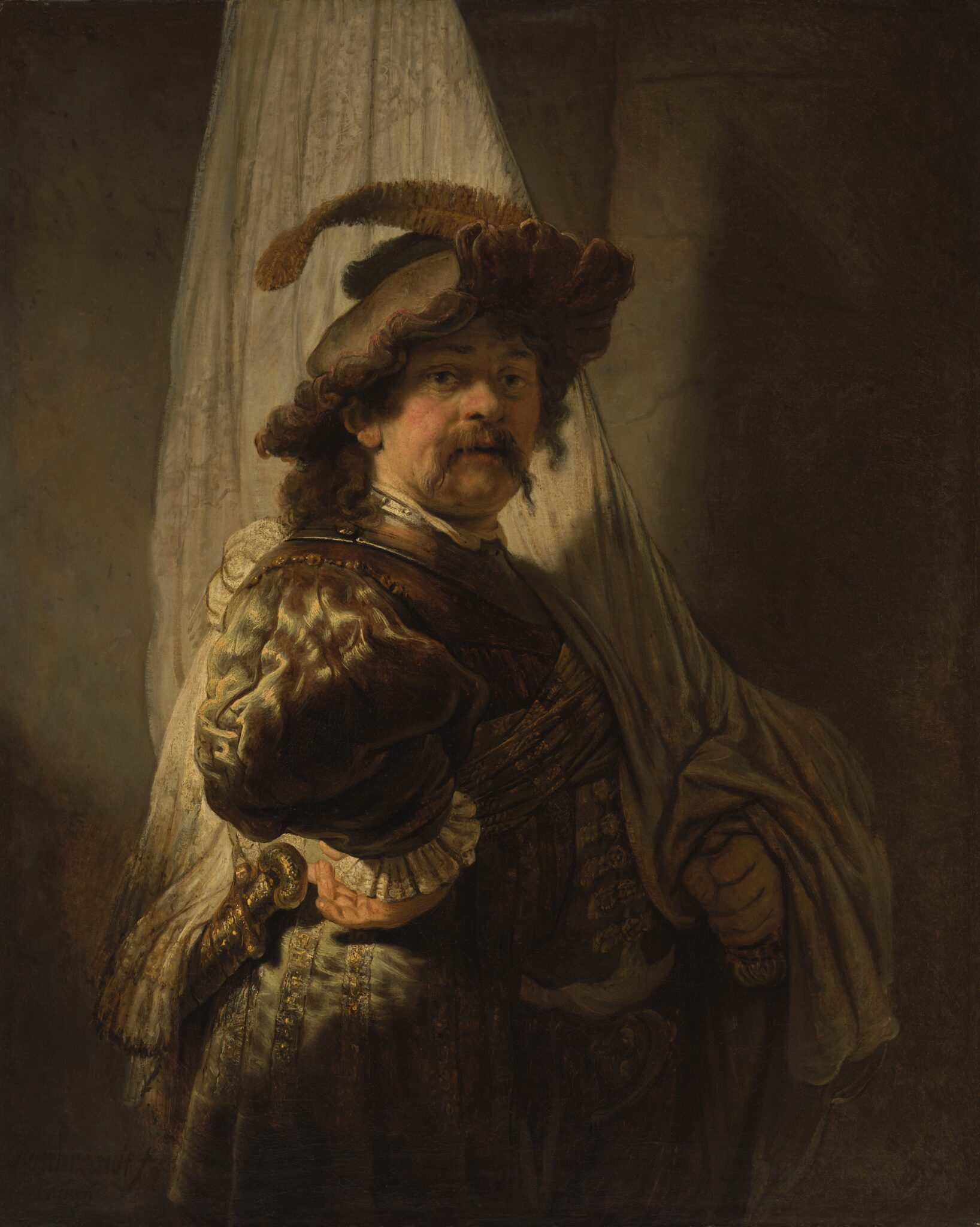
Rembrandt's Path: From Leiden Prodigy to Dutch Master
In the annals of art history, few names resonate with the profound depth and artistic genius of Rembrandt Harmenszoon van Rijn. Born in the vibrant city of Leiden, Netherlands, on July 15, 1606, Rembrandt embarked on a journey that would transform him from a miller's son into a luminary whose works define the Dutch Golden Age. His story is one of meteoric rise, unparalleled artistic innovation, and poignant personal struggle, all culminating in the creation of an artistic legacy that continues to captivate and challenge viewers worldwide. To encounter an echtes Rembrandt Gemälde today is to witness a masterpiece forged by a master who understood the human condition like no other.
The Formative Years: Leiden's Gift to the Art World
Rembrandt's origins were modest, yet his destiny was anything but ordinary. The ninth child of Harmen Gerritsz van Rijn, a miller, and Neeltje Willemsdr van Suydtbrouck, a baker's daughter, his early life in Leiden provided a rich, bustling backdrop to his nascent talent. While his family ensured he received a decent education, enrolling him in Latin school at the tender age of 14, young Rembrandt's interests lay not in classical texts but in the vibrant world of art. This early disinterest in traditional schooling and a keen gravitation towards artistic pursuits quickly set him on his fated course.
His earliest known works, such as the compelling series depicting the "Allegories of the Senses" – including Stone Operation (Allegory of Touch), Three Musicians (Allegory of Hearing), and Unconscious Patient (Allegory of Smell) – offer a fascinating glimpse into the mind of a developing genius. These pieces, created when he was barely out of his teens, already hint at his lifelong fascination with capturing raw human emotion and detailed realism. It was clear even then that the young artist possessed an innate ability to translate the tangible and intangible onto canvas, foreshadowing the masterpieces that would later be recognized as an echtes Rembrandt Gemälde.
By 1625, seeking to hone his craft further, Rembrandt made a crucial move to Amsterdam. There, he apprenticed with Pieter Lastman, the leading history painter of his era. This six-month tutelage was transformative, immersing Rembrandt in the grand traditions of history painting, a genre he initially aspired to master. His Stoning of Saint Stephen, dated 1625, stands as a testament to this ambition and his rapid absorption of Lastman's dramatic narrative techniques. Back in Leiden, his growing reputation attracted his first pupils, including the soon-to-be-famous Gerrit Dou in 1628, followed by Isaac de Jouderville. This period also saw a close friendship and artistic collaboration with his contemporary, Jan Lievens, whose shared stylistic traits in their work from the late 1620s underscore their mutual influence and respect.
Ascension to Stardom: Amsterdam's Golden Era
The early 1630s marked a pivotal turning point in Rembrandt's career. By 1631, he had effectively taken charge of the thriving Amsterdam workshop of Hendrick Uylenburgh, a renowned art dealer with whom he also lodged. This strategic move placed him at the heart of the Dutch art market, bringing him into contact with influential patrons and opening doors to lucrative commissions. It was during this period that Rembrandt solidified his reputation as a portraitist and history painter of extraordinary skill.
The year 1632 brought one of his most iconic works: The Anatomy Lecture of Dr. Nicolaes Tulp. This revolutionary group portrait, depicting a public dissection, not only showcased Rembrandt's masterful use of light and shadow but also his innovative approach to composition, imbuing each figure with individual character and psychological depth. It was a resounding success, solidifying his status as Amsterdam's most sought-after painter.
In 1634, Rembrandt married Saskia Uylenburgh, the daughter of a burgomaster and a cousin of Hendrick Uylenburgh. This union not only brought him personal happiness but also further cemented his connections within Amsterdam's elite circles. His artistic prowess allowed him to command impressively steep prices for his work, a testament to his high esteem. For instance, in 1639, the court in The Hague paid him an astounding 1,200 guilders for two emotionally charged Passion scenes: The Entombment of Christ and The Resurrection of Christ. These works, alongside others like The Adoration of the Shepherds and The Circumcision of Christ, exemplify his unparalleled ability to convey profound human drama and spiritual narrative.
The pinnacle of his early success arrived with The Night Watch, painted between 1639 and 1642. This monumental civic guard picture, officially titled Militia Company of District II under the Command of Captain Frans Banninck Cocq, revolutionized the genre of group portraiture. Instead of static poses, Rembrandt captured a moment of dynamic action, employing dramatic chiaroscuro and an almost cinematic composition. Each of the eighteen officers portrayed paid an average of 100 guilders, highlighting the collective investment in what would become one of the most famous paintings in art history. To delve deeper into these iconic creations, explore The Masterpieces of Rembrandt: Unveiling His Iconic Art.
Challenges, Legacy, and the Enduring Allure of an Authentic Rembrandt
Despite his towering artistic achievements, Rembrandt's life was also marked by profound personal tragedy and financial hardship. He and Saskia endured the heartbreaking loss of three children before their son, Titus, was born in 1641. Misfortune struck again swiftly in 1642, when Saskia died at the young age of twenty-nine. This period initiated a difficult and scandalous chapter for the artist, deeply impacting his personal life and later, his finances. The complexities of his relationships with Geertje Dircks and later, Hendrickje Stoffels, underscore the very human struggles that lay beneath the surface of his artistic genius. For a more in-depth look at his personal life, consider reading Beyond the Canvas: Rembrandt's Life, Loves, and Tragedies.
As tastes in art began to shift in the mid-17th century, favouring the more polished and conventional styles of painters like Govaert Flinck and Bartholomeus van der Helst, Rembrandt's dramatic and psychologically intense approach fell somewhat out of fashion with certain segments of the elite. Yet, his influence as a teacher continued unabated, nurturing talents such as Carel Fabritius, Nicolaes Maes, and Arent de Gelder, who would carry forward aspects of his revolutionary techniques.
Rembrandt's self-portraits, a series he pursued throughout his life, offer an unparalleled visual autobiography. From the fresh-faced youth to the deeply weathered older man, these works reveal an artist relentlessly introspective, unafraid to expose his vulnerabilities and the passage of time. A description of one such portrait – an older man with "pale, peachy skin looks out at us with deep-set, gray eyes under a furrowed brow," his "faintly pink, bulbous nose" and "wispy, gray mustache and goatee" – speaks to his enduring fascination with the human face as a canvas for emotion and experience. These self-portraits, perhaps more than any other works, embody the soul of an echtes Rembrandt Gemälde: raw, honest, and profoundly human.
Practical Tip: Identifying an Echtes Rembrandt Gemälde
With hundreds of paintings attributed to Rembrandt over the centuries, discerning an authentic work – an echtes Rembrandt Gemälde – is a complex process. Art historians and conservators employ a multi-faceted approach:
- Stylistic Analysis: Close examination of brushwork, composition, use of light (chiaroscuro), and emotional depth unique to Rembrandt.
- Provenance: Tracing the painting's ownership history to establish an unbroken chain of custody from the artist's time.
- Technical Analysis: Using scientific methods like X-radiography, infrared reflectography, and pigment analysis to reveal underdrawings, changes, and the materials used, comparing them to known Rembrandt techniques.
- Connoisseurship: The trained eye of leading Rembrandt scholars, whose extensive experience with his body of work is invaluable.
Rembrandt's journey from a young prodigy in Leiden to a master of the Dutch Golden Age is a testament to his singular vision and indomitable spirit. Despite personal and professional challenges, he never ceased to innovate, to explore the depths of human emotion, and to push the boundaries of artistic expression. His legacy is not just in the breathtaking beauty of his canvases, but in the profound humanity that emanates from every brushstroke. To behold an echtes Rembrandt Gemälde is to connect with a timeless artistic genius whose path illuminated the very soul of art itself, inspiring generations and forever enriching our understanding of what painting can achieve.