The Timeless Allure of Rembrandt's Iconic Art
Few names resonate with the same artistic gravitas as Rembrandt van Rijn. The Dutch Golden Age master created a body of work so profound, so emotionally charged, and so technically brilliant that it continues to captivate audiences centuries later. From his intensely psychological portraits to his dramatic biblical scenes, an echtes Rembrandt Gemälde represents not merely a historical artifact but a direct conduit to the human soul, explored through an unparalleled mastery of light, shadow, and expression.
This article delves into the iconic art of Rembrandt, exploring the journey of this unparalleled genius, the distinct characteristics that define his masterpieces, and the ongoing fascination with authenticating an echtes Rembrandt Gemälde in today's art world. Join us as we unveil the layers of meaning and technique that make Rembrandt's legacy truly immortal.
From Leiden Prodigy to Amsterdam Master: The Formative Years
Early Life and Artistic Awakening
Born on July 15, 1606, in Leiden, the Netherlands, Rembrandt Harmenszoon van Rijn was the ninth child of Harmen Gerritsz van Rijn, a miller, and Neeltje Willemsdr van Suydtbrouck, a baker's daughter. Despite his humble beginnings, the young Rembrandt showed little interest in a conventional academic path. At the age of 14, he was admitted to a Latin school, but his heart was already set on art. This early disinterest in traditional schooling hints at a fiercely independent spirit, one that would later redefine the conventions of art itself.
His earliest known works, such as the allegories of the senses – including Stone Operation (Allegory of Touch), Three Musicians (Allegory of Hearing), and Unconscious Patient (Allegory of Smell) – reveal a nascent talent for capturing human experience. These pieces, created during his formative years in Leiden, demonstrate an early ambition to delve into complex narrative and emotional expression, laying the groundwork for the psychological depth that would become his hallmark.
The Amsterdam Ascent: Training and Triumph
The decisive turn in Rembrandt's career came in 1625 when he moved to Amsterdam to complete his training under Pieter Lastman, then a leading painter. Although his apprenticeship with Lastman lasted only six months, its impact was profound. Lastman's emphasis on history painting deeply influenced Rembrandt, who quickly aspired to this prestigious genre. His 1625 painting, Stoning of Saint Stephen, is a testament to this aspiration, showcasing a dramatic biblical scene rendered with an impressive command of composition and emotion.
By 1628, Rembrandt had established his own workshop in Leiden, attracting students like Gerrit Dou and Isaac de Jouderville. During this period, he also formed a close friendship and artistic collaboration with Jan Lievens, their works from the late 1620s often showing a remarkable stylistic correlation. However, Amsterdam beckoned with greater opportunities. By 1631, Rembrandt was managing the bustling workshop of renowned art dealer Hendrick Uylenburgh in Amsterdam, where he also lodged. This move cemented his presence in the thriving Dutch art capital.
His fame skyrocketed with The Anatomy Lecture of Dr. Nicolaes Tulp (1632), a revolutionary group portrait that captured the individual personalities and intellectual engagement of its subjects rather than simply presenting them in a static row. This groundbreaking work instantly established his reputation as a master of portraiture and narrative. In 1634, he married Saskia Uylenburgh, Hendrick's cousin, marking a period of considerable personal and professional success. To learn more about his incredible journey from a promising young artist to a national treasure, explore Rembrandt's Path: From Leiden Prodigy to Dutch Master.
Iconic Canvases: Unpacking Rembrandt's Masterpieces
Revolutionizing Portraiture and Group Scenes
Rembrandt's genius lay not just in his technical prowess but in his ability to imbue his subjects with profound psychological depth. His portraits, whether of individuals or groups, transcend mere likeness to reveal the inner life of his sitters. He commanded impressive prices for his work well into the 1650s, a testament to his high esteem. For instance, in 1639, he received 1,200 guilders from the court in The Hague for two dramatic Passion scenes: The Entombment of Christ and The Resurrection of Christ.
The pinnacle of his group portraiture, and arguably one of the most famous paintings in the world, is The Night Watch. Created between 1639 and 1642, this civic guard picture broke all conventions. Instead of a static, orderly presentation of the militia company, Rembrandt depicted a dynamic, theatrical moment of action, utilizing dramatic light and shadow to guide the viewer's eye. Each of the eighteen officers portrayed paid an average of 100 guilders, reflecting the painting's ambitious scale and innovative approach.
The Power of Light and Shadow: Chiaroscuro Mastery
Rembrandt is synonymous with chiaroscuro—the dramatic use of strong contrasts between light and dark, usually bold contrasts affecting a whole composition. He didn't just use light to illuminate; he used it to sculpt forms, create mood, and draw attention to the emotional core of his subjects. From the ethereal glow in The Adoration of the Shepherds to the poignant intimacy of The Circumcision of Christ, his use of light is never merely decorative; it is integral to the narrative and emotional impact.
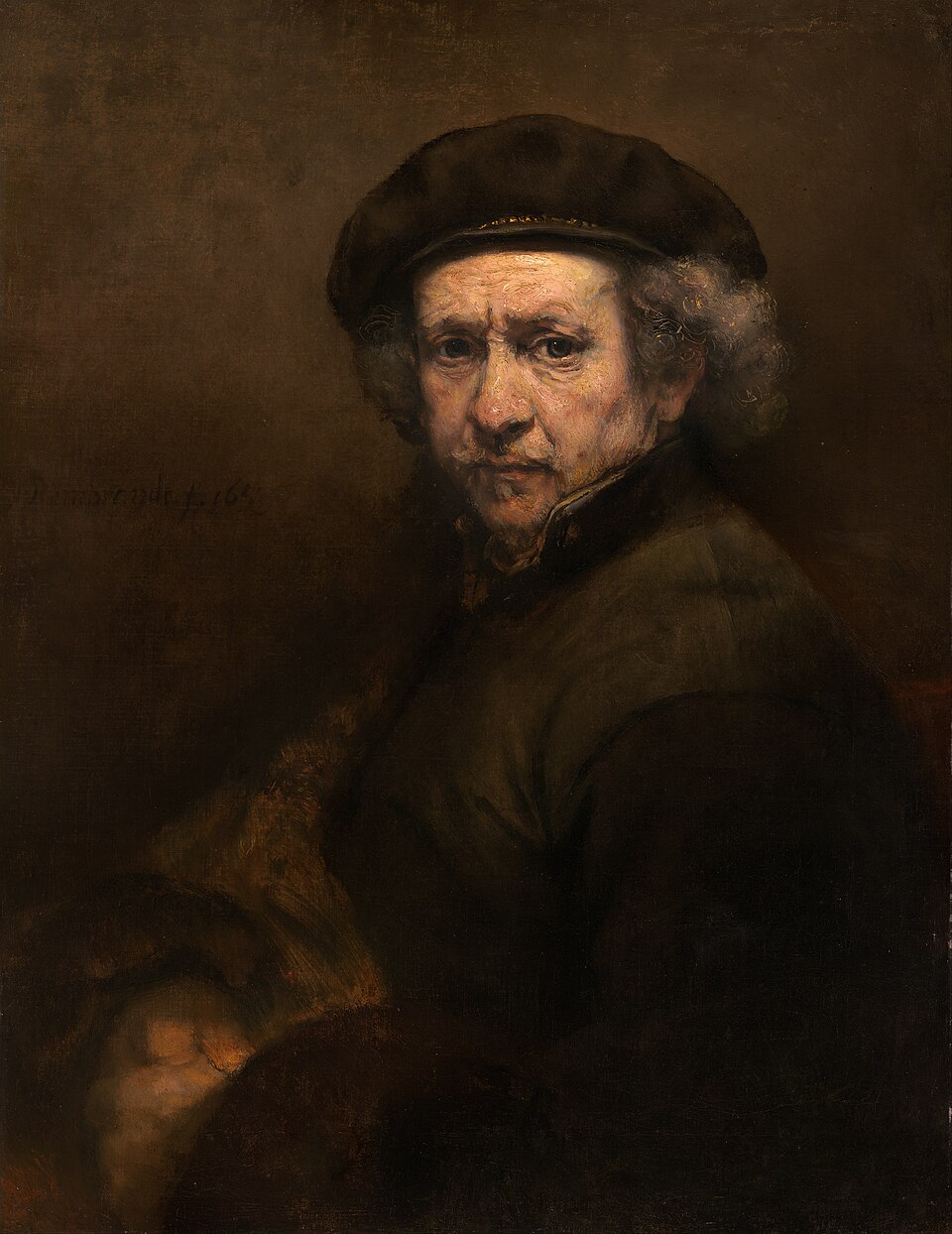
His self-portraits, a unique and extensive body of work spanning his entire career, offer an intimate chronicle of a life lived. In these paintings, such as the one described as depicting an older man with "pale, peachy skin," "deep-set, gray eyes under a furrowed brow," and a "faintly pink, bulbous nose," Rembrandt meticulously documented the physical and emotional changes wrought by time and experience. These works are not just self-studies; they are universal explorations of aging, introspection, and the human condition.
Beyond the Brush: Life's Trials Reflected in Art
Despite his artistic triumphs, Rembrandt's life was marked by profound personal tragedies. He and Saskia buried three children before the birth of their son, Titus, in 1641. Shortly after Titus's birth, Saskia tragically died in the summer of 1642 at the young age of twenty-nine. This period ushered in a difficult and often scandalous chapter in the artist's life, involving complex relationships with Geertje Dircks, Titus's nurse, and later, Hendrickje Stoffels, his long-time companion. His later work, though often less popular with the changing tastes of the elite (who favored artists like Govaert Flinck and Bartholomeus van der Helst), showed even greater psychological depth and emotional honesty, perhaps reflecting his own profound experiences of loss and resilience. His struggles, loves, and enduring spirit are explored further in Beyond the Canvas: Rembrandt's Life, Loves, and Tragedies.
The Quest for an Echtes Rembrandt Gemälde: Authenticity in Focus
The Elusive Nature of Provenance
The desire to own or even merely gaze upon an echtes Rembrandt Gemälde is immense, driving fervent scholarship and intense market activity. However, establishing the authenticity of a Rembrandt painting is a complex and often contentious process. During his lifetime, Rembrandt ran a prolific workshop, employing talented students and assistants like Carel Fabritius, Nicolaes Maes, and Arent de Gelder, many of whom adopted his style. This practice, common in the 17th century, makes differentiating between a master's own hand, a student's rendition, or even a pastiche incredibly challenging.
The provenance—the history of ownership—of a painting is crucial but can be incomplete or fabricated over centuries. Many works once attributed to Rembrandt have been reattributed to his pupils or followers, famously documented by the Rembrandt Research Project (RRP), an initiative that revolutionized Rembrandt scholarship by systematically re-examining his entire oeuvre.
Expertise and Technology: Unmasking Fakes
Determining an echtes Rembrandt Gemälde requires a multi-faceted approach, combining art historical expertise with advanced scientific analysis:
- Connoisseurship: Experienced art historians study stylistic characteristics, brushwork, use of light, color palette, and compositional choices, comparing them against undisputed authentic works. They look for the unique "hand" of Rembrandt.
- Technical Analysis:
- X-ray Radiography: Reveals underlying sketches, changes in composition (pentimenti), and the painting's construction, offering insights into the artist's process.
- Infrared Reflectography: Penetrates paint layers to reveal underdrawings, providing clues about the initial design and whether it aligns with Rembrandt's known methods.
- Pigment Analysis: Identifies the chemical composition of paints. The presence of anachronistic pigments can immediately deauthenticate a work.
- Dendrochronology: For paintings on wood panels, this method dates the wood by analyzing tree rings, ensuring it aligns with Rembrandt's lifetime.
- Canvas Weave Analysis: Examines the weave patterns of linen canvases to identify patterns consistent with those used in Rembrandt's workshop during specific periods.
- Archival Research: Scrutinizing historical documents, inventories, and letters for mentions of specific works can provide strong evidence of authenticity.
Tips for Appreciating Authenticity
For the admirer of art, understanding the nuances behind an authentic Rembrandt enriches the viewing experience. Look beyond the surface; consider:
- The Story: How does the painting communicate a narrative or emotion? Rembrandt excels at capturing peak dramatic moments or profound introspection.
- The Light: Pay attention to how light is used—not just as illumination, but as a compositional tool, a psychological indicator, and a source of dramatic tension.
- The Humanity: Rembrandt's figures, even in grand historical scenes, possess a profound humanity and psychological depth that few artists have matched.
- The Texture: His audacious impasto (thick application of paint) in certain areas, particularly later in his career, adds a tactile dimension to his works.
The Indelible Legacy of Rembrandt van Rijn
Rembrandt's influence reverberates through art history. His innovative use of light and shadow, his unprecedented psychological realism, and his empathetic portrayal of the human condition cemented his status as one of the greatest artists of all time. He taught a generation of artists and continues to inspire countless more. His ability to fuse technical mastery with profound emotional insight means that an echtes Rembrandt Gemälde is more than just a painting; it is a profound testament to the enduring power of art to reflect and explore the depths of human experience.
From the bustling streets of Leiden to the grand workshops of Amsterdam, Rembrandt van Rijn carved a legacy that remains unparalleled. His masterpieces continue to challenge, inspire, and move us, proving that true genius transcends time. The quest for an authentic Rembrandt is a journey into history, connoisseurship, and the very essence of artistic brilliance.